
Last updated October 16, 2026




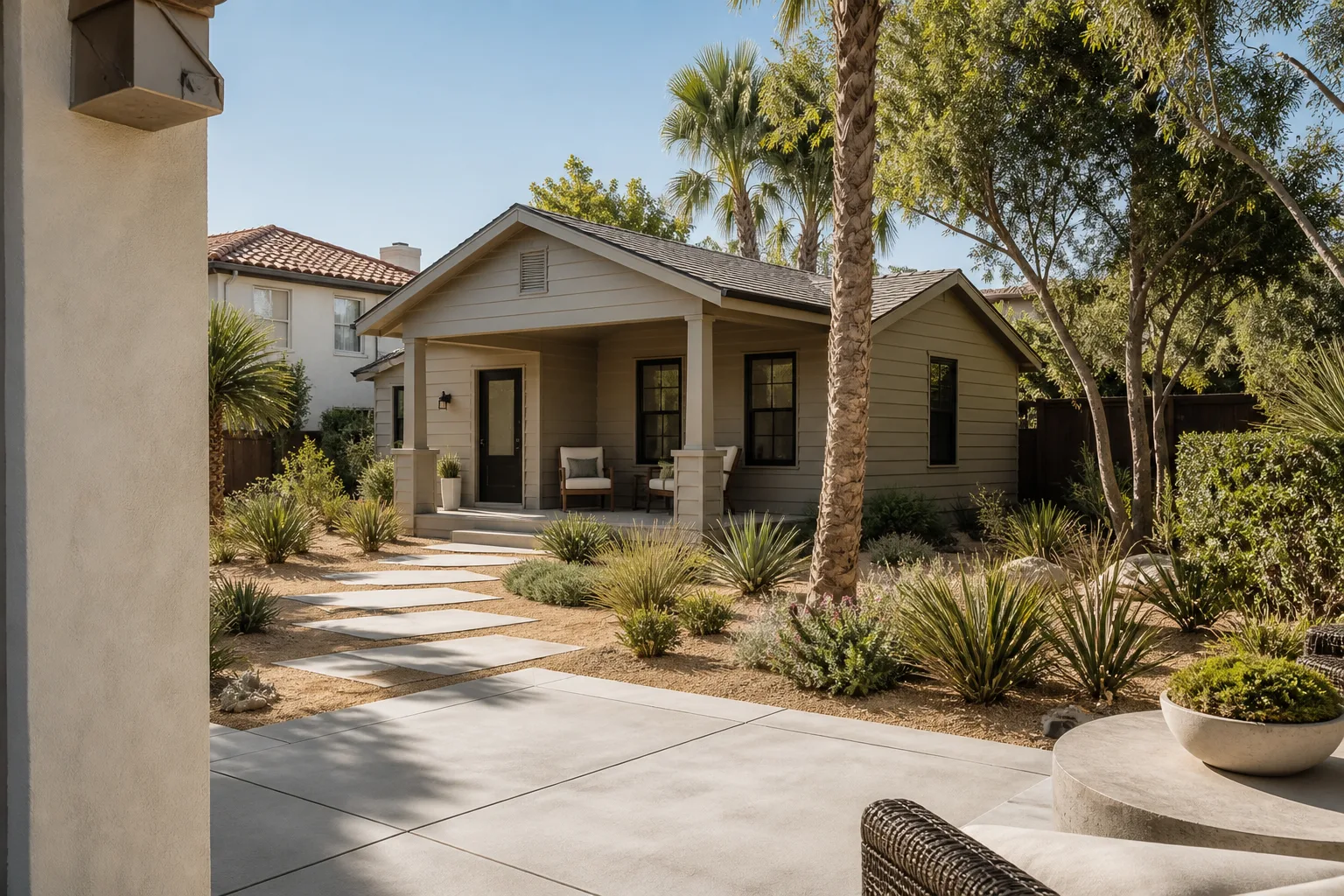
Free written scope consultation - allowances, timeline, and change-order rules on paper before a single trade is scheduled
How to Hire a Construction Contractor in San Jose: A Step-by-Step Guide
California’s Contractors State License Board logged more than 20,000 complaints in 2023, and the uncomfortable detail buried in that number is that most of those contractors held a valid license when they were hired. The license check catches the guy working out of his truck with a stolen logo. It doesn’t catch the licensed contractor who shakes hands on a verbal scope, pulls permits under the wrong classification, or leaves you holding a mechanic’s lien because he never paid the cabinet supplier. This guide is built for San Jose homeowners who want the contract-level specifics, not the standard Yelp-search advice, and you can find more guides & resources on our blog. We’ll walk through how to verify a license the right way, what a compliant California contract has to include, how to structure payments so you’re never out of pocket ahead of the work, and how to spot the red flags that burn people in this market specifically.
Quick Answer
To hire a construction contractor in San Jose, verify the license number against the CSLB database and confirm the classification matches your project (B-General for whole-home work, C-8 for concrete, etc.), then require a written contract that meets California Business & Professions Code §7159 before any money changes hands. Structure payments around verified completion milestones with a conditional lien waiver at each draw, never sign before the contract includes a schedule of allowances, and confirm the contractor pulls permits under their own license number so you’re protected if something goes wrong.
Styles & brands we work with







Table of Contents
- How to Verify a CSLB License Beyond the Number
- What a Compliant California Contract Must Include Under §7159
- How to Structure a Payment Schedule That Protects You
- Mechanic’s Liens in San Jose: The Risk You Didn’t Know You Had
- Red Flags Specific to the San Jose Contractor Market
- Questions to Ask Before You Sign Anything
- Common Mistakes to Avoid
- When to Call a Professional
- Frequently Asked Questions
How to Verify a CSLB License Beyond the Number
The license check is the floor, not the finish line. A valid number tells you the person paid a fee and passed a test. It doesn’t tell you whether the classification covers your project or whether the guy on your doorstep is the guy named on the license. In San Jose, we’ve seen homeowners hire a licensed concrete contractor to run an entire addition, only to find out later that the insurance claim was denied because the work performed wasn’t in the licensed classification. That’s not a loophole. That’s the system working exactly as designed, and it works against you if you don’t check.
Here’s how to verify a license the way a general contractor would:
- Pull the license on CSLB’s website. Go to cslb.ca.gov and run the number. Confirm the name on the license matches the person you’re hiring, not just the company name. Sole proprietorships are common in this trade and a mismatch there is a red flag.
- Check the classification. A B-General Building license covers most residential remodeling and additions. A C-8 covers concrete work only. A C-36 covers plumbing. If your project involves structural work, you need a B. Hiring the wrong classification can void your homeowner’s insurance coverage for the project because the contractor wasn’t licensed to do that work under California law.
- Check the bond status. CSLB requires a $25,000 contractor’s bond. If the bond is cancelled or expired, the license is suspended. A suspended license means no insurance, no protection.
- Ask for the certificate of insurance directly from the carrier. A contractor can hand you a piece of paper that looks like a COI. Have their insurer email you directly. Confirm general liability and workers’ compensation are both active. If a contractor doesn’t carry workers’ comp and one of his guys gets hurt on your property, that claim lands on your homeowners policy.
- Verify the license belongs to the crew on your job. License lending is real. The guy who sells the job holds the license, subs the work out to someone who doesn’t, and collects a margin. Ask point blank: “Who holds the license on this project, and who is doing the work day to day?” If those are different people, ask why.
Most of the San Jose homes we work on are 1960s and 1970s builds with specific structural quirks. The contractor who knows this market knows that Willow Glen houses have foundation settling patterns different from Almaden Valley or Evergreen. That’s the kind of local knowledge you get from a company anchored here, not an out-of-area crew running four jobs in three counties. When you’re vetting a contractor, ask about their work history in your specific neighborhood. The answer tells you more than a license number ever will.
What a Compliant California Contract Must Include Under §7159
California Business & Professions Code §7159 is not a suggestion. It’s the statutory floor for any home improvement contract over $500, and it lists specific items that must appear in the document. A contractor who hands you a one-page quote with a price and a signature line is not giving you a contract. He’s giving you a piece of paper that leaves you exposed. Here’s what a compliant contract has to include:
- The contractor’s name, address, and license number. Not just a dba or a brand name. The legal entity name as registered with CSLB.
- A detailed description of the work. “Remodel kitchen” is not a description. A scope of work that lists what’s being demoed, what’s being built, what materials are included, and what’s excluded. If it’s not in writing, it doesn’t exist.
- A schedule of payments. California caps the down payment at 10% of the total contract price or $1,000, whichever is less. That’s not a negotiating tactic. That’s the law. Any contractor asking for 30% or 50% before work starts is violating it.
- The approximate start and completion dates. These are rarely firm dates, but they have to be in the contract. A reasonable window is fine. No dates at all is not.
- A notice about the three-day right to cancel. You have three business days to cancel a home improvement contract after signing. The contractor must provide this notice in writing.
- A mechanics lien warning. This is the one nobody reads and everybody should. It explains your obligation to ensure subcontractors and suppliers get paid. More on that below.
- The down payment amount and a payment schedule tied to work milestones. Not dates. Milestones. Payment should follow verified completion, not the calendar.
At Bradford Remodeling, every project gets a written price before any work starts. It’s not just a number on a proposal. It’s the scope, the materials, the brand names, the allowance lines, the payment milestones, and the guarantee terms, all in one document, signed before a single tool comes out. The Garrison Standard, the operating framework behind every Bradford Remodeling project, requires that nothing be left to verbal agreement. If we said it, it’s written. If it’s written, it’s priced. If it’s priced, it’s guaranteed. That’s what “squared away” means at job close: a clean site, a documented scope, and a signed written guarantee in your hand.
How to Structure a Payment Schedule That Protects You
Most payment disputes happen because the money and the work got out of sync. A contractor takes a big deposit, front-loads the payment schedule, and by the time you realize the framing is wrong or the tile guy hasn’t shown up in three weeks, you’ve already paid for work that didn’t happen. You’re not negotiating anymore. You’re hoping.
The fix is to structure payments around verified progress milestones, not arbitrary dates. Here’s a payment structure that works for a typical San Jose remodel:
- 10% down at contract signing. This is the legal maximum in California. It should cover permits, ordering materials, and scheduling. Not a dollar more.
- 25% after demo and rough-in inspection. The walls are open, the framing is up, the plumbing and electrical rough-in has passed its first inspection. You’re paying for completed, verified work.
- 25% after drywall and finish carpentry. The rooms started looking like rooms. The cabinets are set but not necessarily finalized. This milestone verifies that the bulk of the labor is done.
- 20% after fixture installation and finishes. Countertops, tile, flooring, paint, the visible work is done and you’ve walked the job with the contractor.
- 15% at final inspection and punch list completion. The city or county inspector has signed off, the punch list items are addressed, and you’re holding a written warranty in your hand.
- 5% retention, released after final walkthrough and warranty registration. This last piece gives you leverage to get the small things fixed. Once it’s paid, your only recourse is the warranty.
Every payment should come with a conditional lien waiver signed by the contractor and, ideally, by any major subcontractors. A conditional lien waiver says: “I waive my right to file a mechanic’s lien for work completed through this payment date, conditioned on the payment clearing.” It’s a two-page form. It protects you from a supplier filing a lien on your property because the contractor pocketed your check and never paid the lumber yard.
At Bradford Remodeling, the payment schedule is written into the contract before work begins and tied to the milestones above. The written price is the written price. We don’t reprice at the door, and we don’t move the numbers when the job gets underway. If something changes in scope, it changes in writing with a signed change order. That’s the whole point of The Garrison Standard: every promise in writing, every price locked, every guarantee spelled out.
Mechanic’s Liens in San Jose: The Risk You Didn’t Know You Had
Here’s the scenario that ruins people. You hire a general contractor for a kitchen remodel in San Jose. You pay him on schedule. He does the work. You move back into your kitchen and you’re happy. Eighteen months later, you try to refinance your house and the lender tells you there’s a mechanic’s lien on the property. The cabinet supplier never got paid. The lien is from a subcontractor you never met. It’s valid, and it’s attached to your house, not the contractor’s.
This is how mechanic’s liens work in California. Any subcontractor, laborer, or material supplier who contributed to your project and wasn’t paid has the right to file a lien against your property. The lien attaches to your house and must be resolved before you can sell or refinance. You can pay the contractor in full and still get hit with a lien if the contractor didn’t pay his subs.
The standard advice is to collect lien waivers from every sub and supplier after each payment. The practical version is simpler: require conditional lien waivers at each payment milestone from the general contractor, and require the general contractor to provide you with copies of unconditional waivers from all major subs and suppliers once the final payment clears. Don’t expect the contractor to volunteer these. Put it in the contract as a condition of payment. If a contractor resists providing lien waivers, that’s not a scheduling issue. That’s a signal about how he runs his business.
This is one of the areas where the cheapest bid costs the most. A contractor working on thin margins is a contractor who’s tempted to slow-pay his suppliers. The supplier files a lien against your property, and you’re negotiating with a lumber yard you never heard of while your contractor has already moved on to the next job. The Garrison Standard exists for exactly this reason: no numbers that move, no subs left unpaid, nothing left to guesswork. When you see a written contract from Bradford Remodeling, you see the line items. You see the brand names. You see the milestones. You’re not trusting anyone. You’re reading the document.
Red Flags Specific to the San Jose Contractor Market
Every market has its own contractor pathologies. San Jose has four that show up repeatedly, and if you know what to look for, you’ll avoid most of the trouble before it starts.
- Out-of-area crews pricing below local rates. A contractor from the Central Valley or Sacramento can underbid a San Jose crew on labor because his overhead is lower. What he can’t do is pull permits in San Jose efficiently, respond quickly when something goes wrong, or stand behind a warranty when he’s running jobs three hours away. The low bid becomes a high-cost lesson when the punch list drags on for months because the crew has to “make the drive.”
- Storm-chaser timing after rain events. The Bay Area’s rainy season runs November through March. After a big storm, you’ll see an uptick in roofing and exterior companies canvassing neighborhoods in the East Foothills, Cambrian, and Almaden. Some are legitimate. Some are following the damage. The legitimate ones don’t go door to door. If a contractor shows up unsolicited after a storm, that’s a flag. A real contractor in San Jose doesn’t need to knock on doors to find work.
- Vague allowance lines in bids. Some contractors use allowance lines to hide pricing. “Fixture allowance: $5,000” without specifying what that covers. The allowance is low enough to win the bid, then when you pick a faucet that’s $200 over the allowance, the change order hits. Every allowance should include a specific make and model or a documented price range. At Bradford Remodeling, we specify brands like KraftMaid for cabinetry, Kohler for fixtures, and James Hardie for exterior siding in the contract so the allowance is anchored to a real product with a real price, not a guess.
- Pressure to skip permits. Any contractor suggesting you skip permits for a remodel in San Jose is not doing you a favor. The city’s building department is serious about compliance, and unpermitted work is a liability at resale. A contractor who suggests skipping permits is signaling that he either can’t pass inspection or doesn’t want the paper trail. Either way, you’re the one holding the problem when you try to sell the house.
Questions to Ask Before You Sign Anything
Most homeowners interview contractors the way they interview housekeepers. They ask about the price and the timeline and whether the person seems nice. The better questions get at how the contractor handles the exact problems that actually happen on San Jose jobs. Here’s what to ask:
- “Who holds the license on this job, and who is doing the work day to day?” If the answer is different people, ask why. You’re hiring a licensed professional, not a project manager who subs everything out to unlicensed labor.
- “How do you handle change orders?” The answer should be: in writing, signed by you, with a price attached. If the contractor says “we’ll work it out,” you’re looking at the exact scenario that causes disputes. At Bradford Remodeling, every change in scope goes through a signed change order before work continues. The written price doesn’t move unless you approve it in writing.
- “What does your warranty cover, and for how long?” Listen for specifics. “We stand behind our work” is not a warranty. “If the work fails within 365 days, we return and correct it at no charge” is a warranty. Bradford Remodeling calls it the 365-Day Done Right Promise. It’s written into every contract, and it means what it says: if it’s not done right, we make it right within the warranty period, with a free return visit.
- “Can I see lien waivers from your last three projects?” Any contractor who pays his subs and suppliers has these on file. A contractor who hesitates doesn’t. This one question tells you more about the financial health of the company than a dozen Yelp reviews.
- “Who answers the phone when I call with a question mid-project?” You’re not asking about hours. You’re asking about how the company runs. At Bradford Remodeling, a live person answers the phone 24 hours a day, 7 days a week. Not a voicemail system, not a callback queue. That’s part of The Garrison Code, the internal standard that governs how every Garrison Partners business operates. You should expect the same from any contractor you hire.
When you’re comparing bids in San Jose, remember that a contractor’s answer to these questions is a better predictor of project outcome than the price on the proposal. A low bid with vague answers is the most expensive thing you can sign.
Common Mistakes to Avoid
- Signing a contract without reading the scope of work. “Remodel kitchen” is not a scope. It’s a vague intention. If the scope doesn’t specify what’s demoed, what’s built, what materials are included, and what’s excluded, you have no contract. You have a suggestion. Buyers in San Jose’s competitive housing market don’t have margin for a suggestion when the work goes sideways.
- Paying too much upfront. California caps the down payment at 10% or $1,000, whichever is less. Anyone asking for more is either ignorant of the law or hoping you are. In a market like San Jose, where remodel budgets routinely reach six figures, that 10% cap is real money. Enforce it.
- Skipping the CSLB classification check. A C-8 concrete contractor quoting a whole-home remodel is not licensed to do the work. If the job fails, your insurance company will point to the classification and deny the claim. This isn’t theoretical. It happens in San Jose every year.
- Accepting an allowance line without a brand attached. “Cabinet allowance: $8,000” means nothing until you know what cabinet line it references. At Bradford Remodeling, allowances are anchored to specific products from Wellborn or KraftMaid, which means the price is tied to a real spec, not a placeholder that gets adjusted upward later.
- Paying the final 10% before the punch list is done. The final draw is your leverage. Once you pay it, you’re relying on the contractor’s goodwill to come back and fix the crooked drawer and the misaligned tile. Hold it until the final inspection is signed off and the punch list is walked line by line.
- Not collecting lien waivers. The cabinet supplier who never got paid can file a lien against your San Jose home even if you paid the contractor in full. A conditional lien waiver at each payment is the only thing that protects you. Put it in the contract as a condition of payment.
- Trusting the lowest bid without checking why it’s low. There’s always a reason. The contractor isn’t carrying insurance. The crew is unlicensed. The materials are cheap imports. The bid didn’t include permits. In San Jose, the gap between the low bid and the realistic bid is usually the exact cost of everything that goes wrong later.
When to Call a Professional
There are projects where the right answer is to stop researching and call a licensed contractor. Structural work on a San Jose house built in the 1960s, for example, isn’t a weekend thing. Load-bearing walls, foundation issues, roof framing, anything touching electrical or plumbing interior to the walls, that’s licensed territory. The same goes for any project requiring a permit under San Jose’s building code. Unpermitted work is a liability at sale and an insurance problem if the work fails. If you’re planning a remodel in the $50,000+ range and you haven’t yet found a contractor who puts everything in writing, that’s another sign you’re ready to call. Bradford Remodeling Co San Jose offers free estimates in San Jose, call (669) 272-2637 to schedule yours. Expect a written price, a documented scope, and no numbers that move at the door.
We’ve also seen a specific trigger that sends people to the phone. It’s the day they realize the contractor they already hired stopped answering calls. No callback, no progress, no explanation. That’s the moment the discipline comes in. A real contractor answers. Call (669) 272-2637 and a live person picks up. That’s The Garrison Code in practice, and it’s the minimum standard every San Jose homeowner should demand.
Frequently Asked Questions
Run the contractor’s license number on the Contractors State License Board website (cslb.ca.gov), confirm the name matches the person you’re hiring, and check the classification to ensure it covers your project type. A B-General Building license covers most residential remodels and additions, while specialty licenses like C-8 only cover specific trades. Hiring the wrong classification can void your insurance coverage for the project.
California law caps the down payment for home improvement work at 10% of the total contract price or $1,000, whichever is less. That’s a statutory limit, not a negotiating position. Any contractor asking for more before work begins is violating Business & Professions Code §7159. Call (669) 272-2637 for a written quote that follows the law to the letter.
A compliant contract under §7159 must include the contractor’s license number, a detailed scope of work, a payment schedule, approximate start and completion dates, a three-day right-to-cancel notice, and a mechanic’s lien warning. If your contract is missing any of these items, it’s not just incomplete, it’s non-compliant. The written price should be in your hand before any work begins.
A mechanic’s lien is a legal claim filed against your property by an unpaid subcontractor or material supplier. You avoid it by collecting conditional lien waivers at each payment and unconditional waivers from all major subs once the final payment clears. Put the waiver requirement in the contract before you sign. Call (669) 272-2637 for a full explanation of how we handle lien protection on every San Jose project.
If the work involves moving plumbing, electrical, or structural walls, yes, and the contractor should pull permits under their own license. Even a small kitchen remodel in San Jose involves electrical and plumbing rough-ins that require inspection. Unpermitted work becomes a disclosure problem at sale and an insurance problem if the work fails. Bradford Remodeling Co San Jose handles kitchen remodels of all sizes with the same written-price commitment, from the Kitchen Remodeling in San Jose page to full Home Remodeling in San Jose projects.
A kitchen remodel typically runs 8 to 12 weeks from permit to final inspection, and a whole-home remodel can run 4 to 8 months depending on scope and inspection scheduling. San Jose’s building department inspection queues can add time, so a contractor with local experience knows how to sequence the work to avoid inspection bottlenecks. Expect the schedule in writing in the contract, with reasonable windows, not firm dates.
The Bottom Line

Hiring a construction contractor in San Jose comes down to one discipline: get everything in writing before any money changes hands, and for a detailed Construction Cost Breakdown: The San Jose Homeowner’s Reference for 2026 to help you budget accordingly. Verify the license and the classification, require a §7159-compliant contract with a detailed scope and milestone-based payments, collect lien waivers at each draw, and walk away from any contractor who asks for more than 10% down or suggests skipping permits. The Garrison Standard behind Bradford Remodeling exists because homeowners have been burned by verbal scopes and moving numbers. A written price before work starts, a 365-Day Done Right Promise after it’s done, and a live person on the phone the whole way through. That’s what squared away looks like in San Jose.
Ready to hire a contractor who puts everything in writing? Bradford Remodeling Co San Jose offers free estimates with a written price before any work begins. Call (669) 272-2637 to schedule yours.
Written by Curtis Lane, Owner at Bradford Remodeling Co San Jose, serving San Jose since 2004.
See the difference
 Before
 After
After Before
 After
After Before
 After
After

