
Free written scope consultation - allowances, timeline, and change-order rules on paper before a single trade is scheduled
Tuff Shed Home Additions & ADU: The San Jose Owner’s Guide
A Tuff Shed home addition or ADU conversion in San Jose typically runs $53,100 to $153,400 depending on foundation work, insulation, and whether you’re converting an existing structure or building new. Bradford Remodeling Co San Jose is an independent contractor, not affiliated with Tuff Shed, but we work on Tuff Shed shells regularly and know exactly what these structures need to become code-compliant living space. Most owners call us after they’ve discovered the shed’s original framing, door openings, or roof assembly won’t pass a San Jose building inspection for residential use.
The short version: Tuff Shed builds a solid shell. But a shell is not a dwelling. The gap between the two is where we work.
Which Tuff Shed Models This Applies To
We work on the Premier Series, Premier Pro Series, and the larger barn-style models that Tuff Shed positions for workshop and studio use. The Premier Pro Series with its 2×4 wall framing at 16 inches on center is the most common starting point for ADU conversion in San Jose because it gives you a real wall cavity for insulation and electrical rough-in. The standard Premier Series uses 2×4 framing at 24 inches on center, which still works but limits your insulation depth and changes how we route wiring.
Here’s the compatibility gotcha most owners miss: Tuff Shed floor systems are rated for storage and light workshop loads, not continuous residential occupancy. A 60 psf live load rating might look fine on paper, but San Jose’s building department will want to see engineered plans showing the floor can carry bedding, furniture, and people day after day. That usually means adding joists or a supplemental foundation. We handle that in every conversion we quote. If you’re replacing failed components, match the part to your original build sheet. The build sheet sticker is usually inside the door jamb or on a wall stud near the entry. If it’s gone, we can measure what’s there and spec the correct replacement. For OEM versus aftermarket: Tuff Shed OEM trim, flashing, and door hardware are fine, but we often upgrade to James Hardie siding and Therma-Tru doors during a conversion because San Jose’s wet winters and summer sun cycles will eat standard shed-grade materials faster than homeowners expect.
Styles & brands we work with







Signs Your Tuff Shed Home Additions & ADU Is Failing
- Doors that stick or won’t latch cleanly. This usually means the shed has settled or the floor system has sagged. On San Jose clay soils, minor seasonal movement is normal, but a door that won’t close is often the first sign the original pier blocks or skids have shifted.
- Drywall cracks at wall-to-ceiling joints. If you’ve already finished the interior and you’re seeing cracks, the roof assembly is moving more than the walls. Tuff Shed trusses aren’t designed for the same deflection limits as residential framing, so a finished ceiling will telegraph every heat cycle.
- Water staining at the bottom plate or floor edge. This is the big one in San Jose. Our winters aren’t harsh, but the shoulder seasons bring real rain. If the shed was set on blocks without proper flashing or a raised curb, water wicks up into the wall framing and the bottom plate rots from the inside. By the time you see a stain, the bottom plate usually needs replacement.
- Soft spots in the floor. Original Tuff Shed flooring is typically 5/8-inch or 3/4-inch OSB or plywood over skids. Continuous foot traffic and any moisture exposure will break it down. A soft spot means the subfloor has lost its structural integrity, and a patch won’t fix the underlying skid or joist issue.
- Electrical tripping or dead outlets. If the shed was wired as a workshop with a single 20-amp circuit, it won’t support a kitchenette, a mini-split, and a bathroom. We see overloaded panels and melted outlets in ADU conversions that skipped the electrical upgrade. That is not a part to replace piecemeal. That is a re-wire, permitted and inspected.
See the difference
 Before
 After
After Before
 After
After Before
 After
AfterReplacement Cost & What’s Included
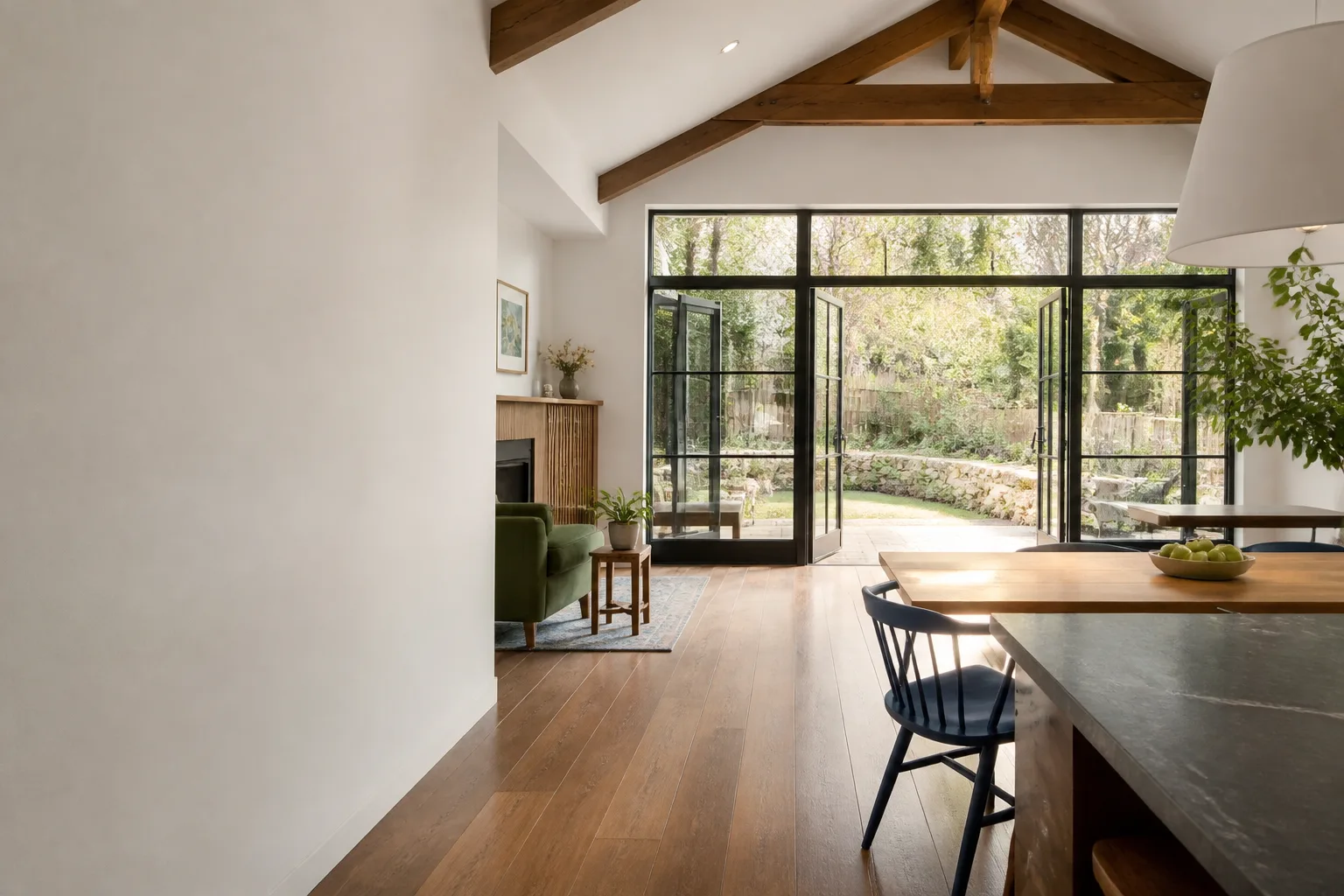
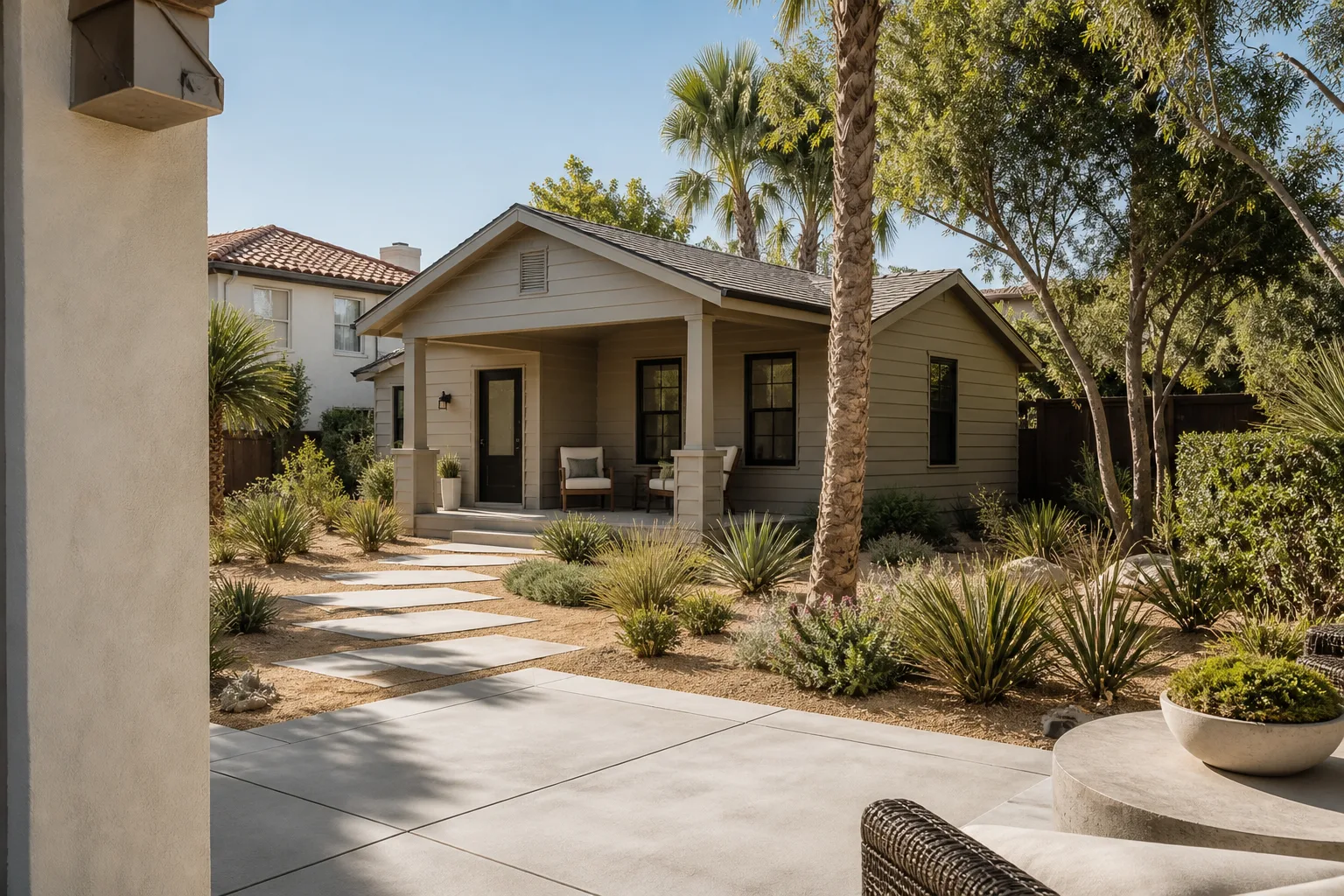
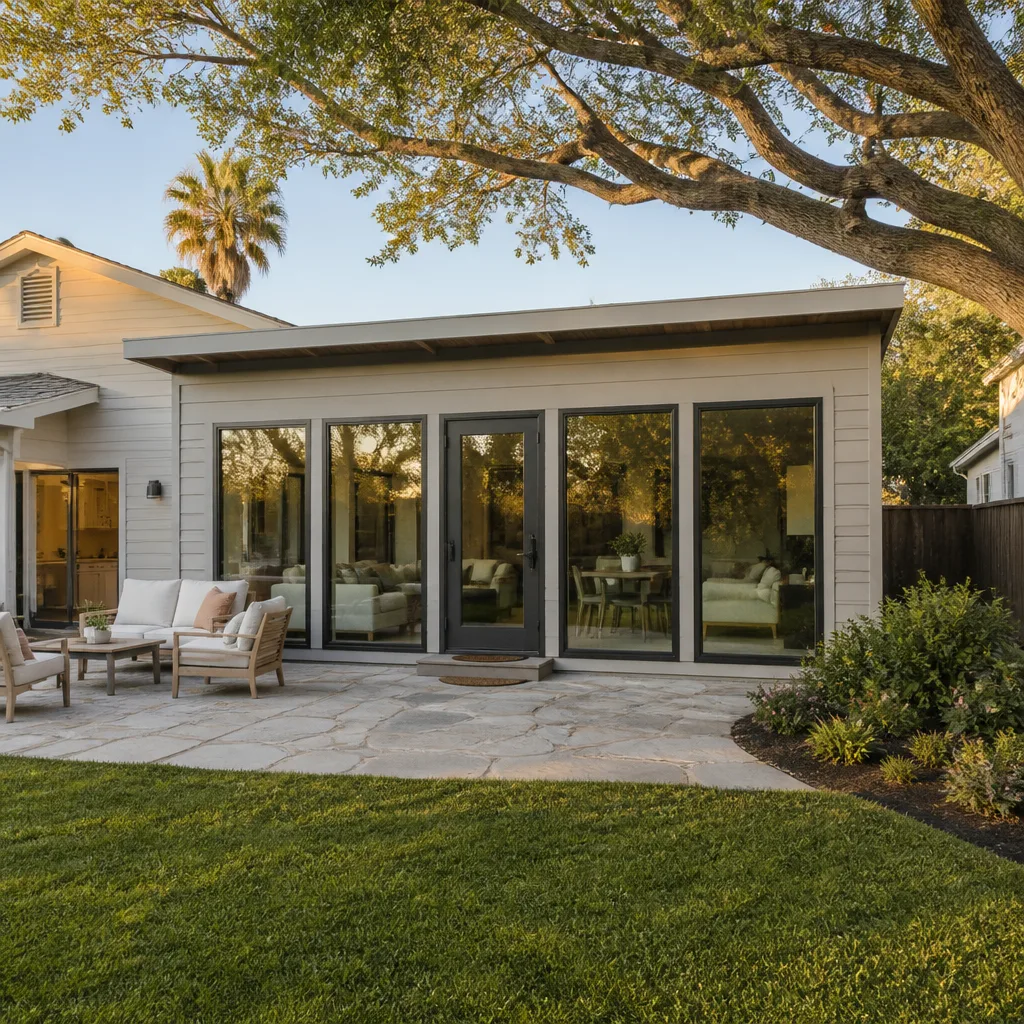
For San Jose homeowners, a full Tuff Shed ADU conversion runs $106,200 to $259,600, while a simpler home addition built on or around an existing Tuff Shed shell lands between $53,100 and $153,400. The spread comes down to three things: foundation work, insulation and HVAC, and whether the project is a conversion or a build-out. A garage conversion of a Tuff Shed structure ranges $35,400 to $94,400 if you’re keeping it as a conditioned workspace without a full bathroom and kitchen.
Every Bradford Remodeling quote includes a written line-item price before we start. That means the framing repair, electrical rough-in, insulation, drywall, flooring, and finish work are all spelled out. No numbers that move at the door. No change orders unless you change the scope. Every completed project carries our 365-Day Done Right Promise: if the work fails within one year, we come back and correct it at no charge. We pull permits and the work passes inspection before we call the job done.
DIY or Call Us?
You can check a few things on your own: look for water staining, test every outlet with a plug tester, and note whether doors and windows open square. That’s useful information to have when you call. What a homeowner should not do is start pulling bottom plates, re-framing door openings, or touching electrical in a structure that will be used for living space. A Tuff Shed shell carries real loads, and once you alter the frame or cut into a load-bearing wall, you own the liability. San Jose building code applies to ADUs, and there is no path to occupancy without a permit. We’ve corrected enough DIY framing errors in Willow Glen and around San Jose to say plainly: this is not the place to save money.
If the job is a straightforward part replacement, like a failed door or a section of rotted siding, call us at (669) 272-2637. We’ll give you a written price and get it done. If the job is a conversion, call us too. We’ll walk you through what code requires and what it costs, with no pressure and no surprises.
FAQs
With proper conversion work, including a real foundation, upgraded exterior cladding like James Hardie, and a conditioned interior, a Tuff Shed ADU will perform for decades, but the original shell materials alone are not built for residential span and moisture exposure. Plan on upgrading the floor system, flashing, and exterior finish as part of any conversion. Call (669) 272-2637 for a written assessment of your specific structure.
Depends on what’s failing. A rotted bottom plate can be cut out and replaced section by section. A sagging floor can be jacked, re-blocked, and reinforced. But if the roof trusses are compromised or the shed was set on skids that have sunk into San Jose clay, a full re-frame is sometimes cheaper than chasing the damage. We’ll tell you which one you’re facing after we look at it.
Most San Jose Tuff Shed ADU conversions run 8 to 16 weeks depending on foundation scope, permit review, and whether you’re adding a bathroom. A part replacement, like a failed door or damaged siding section, is typically a one-day job. We give you a written timeline with the written price, and we hold to it.
We stock common replacement hardware, flashing, door components, and siding materials on our trucks, and we source Tuff Shed OEM parts through our supplier network when an exact match is required. For conversions, we install premium documented materials including KraftMaid, Cambria, Silestone, Kohler, and James Hardie. If we don’t have the part on the truck, we order it and give you a firm install date before we leave.
Written by Curtis Lane, Owner, Bradford Remodeling Co at Bradford Remodeling Co San Jose, serving San Jose and nearby areas.


