
Free written scope consultation - allowances, timeline, and change-order rules on paper before a single trade is scheduled
Cambridge Pavers Home Additions & ADU: The San Jose Owner’s Guide
Cambridge Pavers home additions and ADUs in San Jose typically run $53,100 to $153,400 installed, depending on square footage, foundation work, and whether you’re building up or out. We stock and install Cambridge-compatible hardscape materials and handle full additions and ADU construction from slab to roof, with a written price before any work starts. Most owners discover a problem the same way: a door stops closing square, a crack runs through a paver course, or water pools against the foundation where the addition ties into the house.
Cambridge Pavers are a different animal from poured concrete or generic pavers. They’re a modular system, and when a home addition or ADU is planned around them, the paver field, the substrate, and the drainage have to be spec’d together. Get one wrong and the other two fail inside a few seasons. Curtis Lane and our crew have seen exactly that in San Jose’s older neighborhoods, where clay soil moves and dry summers bake the top layer while winter rains saturate what’s underneath.
Which Cambridge Pavers Models This Applies To
Cambridge Pavers come in three main series that matter for home additions and ADU work: the Ledgestone series (larger format, dimensional, often used for accent walls and outdoor kitchen surrounds), the Roundtable series (modular, smaller, forgiving on curves and tight radii), and the Maytrx series (contemporary, rectilinear, popular for wide patio decks and modern ADU entries). Within each series, face styles vary by color blend, and the critical compatibility gotcha is this: Cambridge color blends are batch-specific. A paver installed in 2019 from the “Oyster Shell” blend will not be an exact shade match to a 2024 batch of the same name. UV exposure in San Jose’s 300-plus sunny days a year lightens the surface further.
For an addition or ADU, the question is rarely “do you stock the right paver.” It’s “does the new hardscape tie into the old without looking like a patch job, and does the drainage under the new slab handle San Jose’s winter storm load.” OEM Cambridge Pavers are the right call when you’re matching an existing field and within a roughly 5-year install window. Beyond that, we’ll often recommend a deliberate transition course, a contrasting soldier course or border detail, so the old and new read as intentional design rather than a failed match. We also work with Unilock and Belgard where a different modular paver makes more sense for the site.
Styles & brands we work with







Signs Your Cambridge Pavers Home Additions & ADU Is Failing
- Pavers sinking or lipping at the addition wall line. The trench wasn’t backfilled and compacted in lifts, or the frost/freeze-thaw cycle in San Jose’s occasional cold snaps pushed the base course up. Water gets underneath and the whole field starts to move.
- Hairline cracks at the junction where the new slab meets the existing house. In San Jose clay soil, this is almost always a settlement issue. The addition’s footing wasn’t keyed into the existing foundation or the soil wasn’t engineered for the load.
- Water pooling against the ADU foundation after rain. The paver base course lost its slope, or the permeable joint sand has washed out. Standing water against a foundation is the fastest way to a damp crawlspace and a slab crack.
- A door in the new addition that stops latching or swings open on its own. The framing or the slab has moved. That’s a structural signal, not a hardware problem, and it’s the one homeowners should never ignore.
- Efflorescence, that white chalky film, blooming on the pavers themselves. Water is wicking up through the substrate and evaporating through the paver face. It’s not just cosmetic; it tells you the drainage plane under the field has failed.
See the difference
 Before
 After
After Before
 After
After Before
 After
AfterReplacement Cost & What’s Included
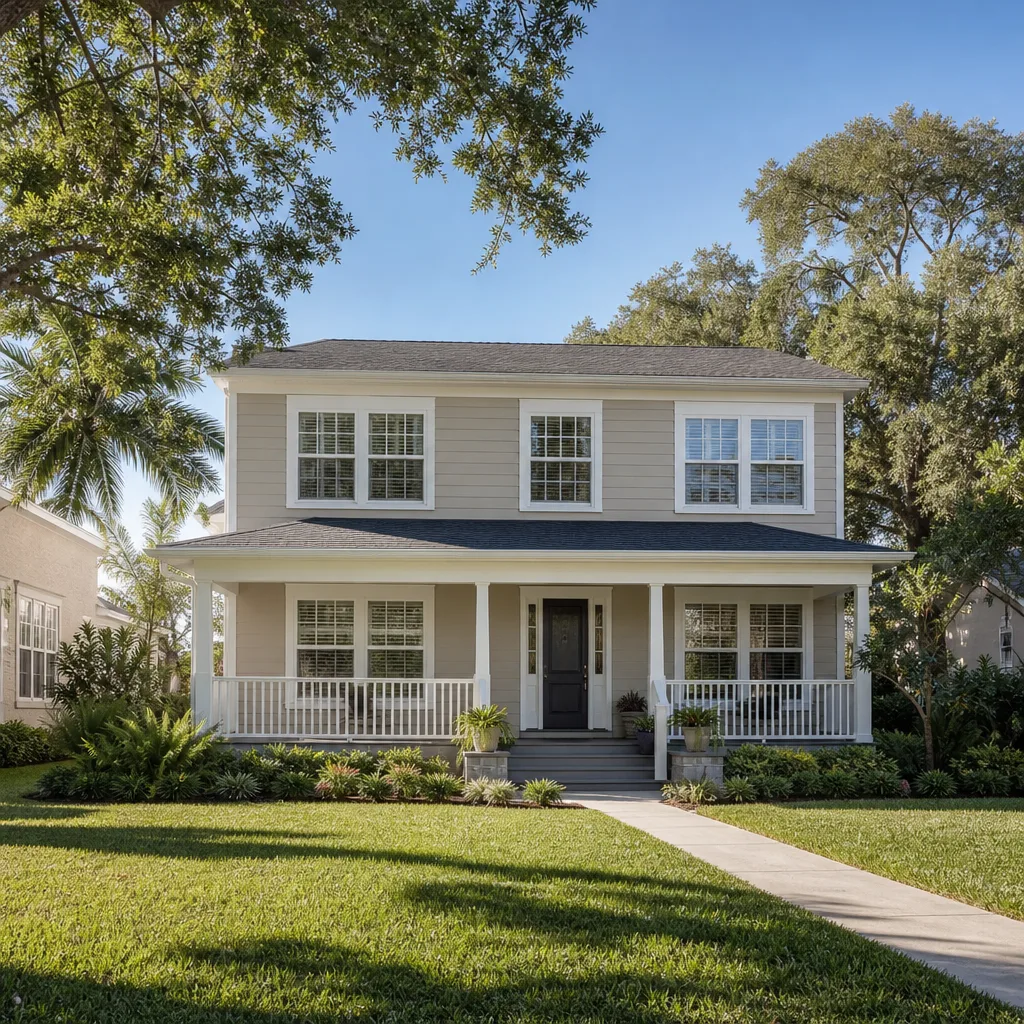
For a Cambridge Pavers home addition or ADU in San Jose, the range we just gave you, $53,100 to $153,400, is the installed number. That includes permits, engineering, foundation, framing, roofing, and the hardscape tie-in with the Cambridge-compatible paver system. It does not include hidden change orders, because we don’t write change orders mid-job unless you ask us to change the scope. The price we put in writing before the first tool comes out is the price you pay.
What moves the number on a project like this: square footage (an ADU at 500 square feet lands at the low end; a 1,200-square-foot addition with a new kitchen pushes the top), whether the site has access for a mini-excavator or we’re hand-digging around your rose garden, and what the soils report says. San Jose’s hillside lots and older flat lots with decades of fill have very different engineering requirements. Every project closes with a signed, written guarantee under the 365-Day Done Right Promise. If something fails inside that year, we come back and correct it at no charge.
DIY or Call Us?
Here’s the honest split. You can safely power-wash the paver field, pull a few weeds from the joints, and check whether the surface drains away from the structure after rain. That’s homeowner-level work and you should do it. What you should not do is start excavating alongside a foundation, cutting pavers, re-sloping a base course, or touching anything that ties into gas, electrical, or load-bearing framing. A failed addition foundation is how houses get condemned, and a bad DIY paver base fails again in two seasons.
If you’re seeing structural movement, a cracked slab, or water against the foundation, call us at (669) 272-2637. We’ll send a written scope and a straight number before you commit to anything. Straight number, written scope, done when we said done.
FAQs
A properly built addition or ADU on a Cambridge-compatible paver system should last 50-plus years for the structure, with the paver field itself resurfaced or re-sanded every 8 to 12 years depending on sun exposure and drainage. The failure point in San Jose is almost never the pavers; it’s the water management underneath. Call (669) 272-2637 if you want an exact assessment of your site.
It depends on what’s failing. A settled edge course or a drainage correction can often be fixed by pulling the affected section, re-compacting the base, and re-laying the same pavers. A cracked foundation or a moving slab means structural work, not just surface repair. We’ll tell you which one you have, with a written price, before any work starts. Estimates are free at (669) 272-2637.
Plan on five to eight months for a full ADU or addition, from permit submittal through final inspection, with city review times in San Jose adding anywhere from a few weeks to a couple of months depending on the planning department’s current queue. Hardscape-only projects like a paver patio or driveway typically run one to two weeks. For a realistic timeline on your specific property, call us at (669) 272-2637.
We keep a working inventory of Cambridge-compatible joint sand, edge restraints, and base course materials on our trucks, and we order Cambridge Pavers directly per project so your color blend matches what’s already on site. We’re an independent contractor, not affiliated with Cambridge Pavers, so we can also spec Unilock, Belgard, or other modular systems if that’s the better call for your job. For a materials list and a written price, call (669) 272-2637.
Need a straight answer on your Cambridge Pavers addition or ADU project? Call us at (669) 272-2637 for a free estimate and a written scope before you spend a dollar. We’ll walk the site, give you the number, and put the guarantee in writing.
Written by Curtis Lane, Owner, Bradford Remodeling Co at Bradford Remodeling Co San Jose, serving San Jose and nearby areas.


