
Free written scope consultation - allowances, timeline, and change-order rules on paper before a single trade is scheduled
Plant Prefab Bathroom Remodeling: The San Jose Owner’s Guide
Plant Prefab bathroom remodeling in San Jose typically runs $10,620 to $33,040, depending on whether we’re replacing surface materials or opening walls to replace failed waterproofing, subfloor, or rough-in plumbing. Most Plant Prefab owners call us after noticing water staining on a ceiling below, a shower pan that’s begun to flex, or grout that keeps cracking no matter how many times it’s re-applied. The short version: these are factory-built panels with tight tolerances, and the failure is rarely the panel itself. It’s almost always the field seams, the shower waterproofing, or the connection points where the prefab module meets site-built framing. Bradford Remodeling Co San Jose is an independent contractor, not affiliated with Plant Prefab, and we work on these homes regularly across San Jose, including Willow Glen, Rose Garden, and Japantown.
Here’s what we know from doing these jobs: the bathroom in a Plant Prefab home ages differently than a stick-framed bath. The factory tolerances are excellent, but the site assembly is where problems start. If you own one of these homes, this page will tell you what fails, what it costs to fix properly in San Jose, and how we price the work before the first tool comes out.
Which Plant Prefab Models This Applies To
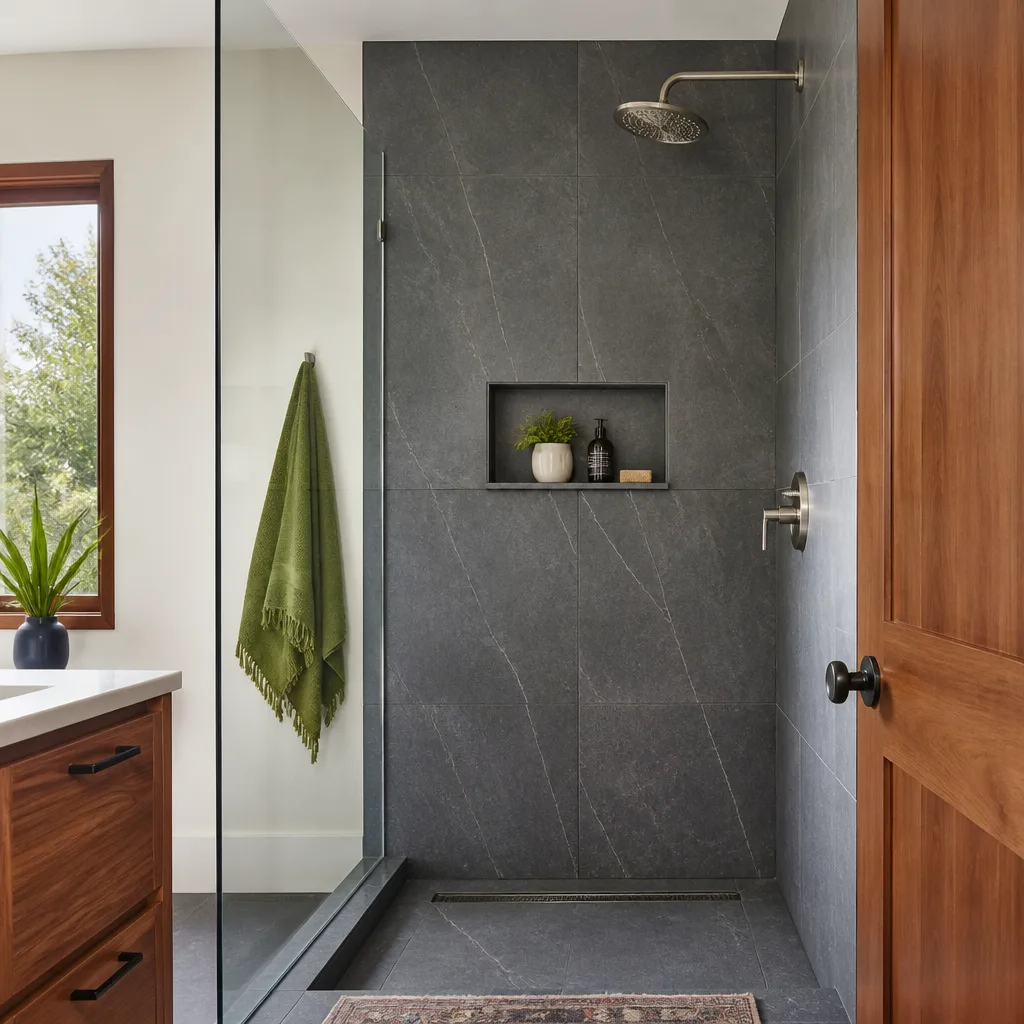
Plant Prefab builds single and multi-family homes using panelized systems, not the same bathroom module in every project. That means the bathroom finishes, plumbing layout, and waterproofing assembly vary from home to home. We’ve worked on baths with curbless showers in slab-on-grade setups, tub surrounds on upper floors, and powder rooms tucked against utility walls. The applicability here isn’t a model number. It’s the prefab construction method itself.
Here’s the compatibility gotcha most San Jose owners don’t know until demo starts: Plant Prefab panels are typically built to tighter dimensional tolerances than site framing, which means a standard off-the-shelf shower receptor or prefab acrylic wall system often doesn’t seat correctly at the panel joints. If a previous contractor already patched in a repair, you may be dealing with mixed materials that shouldn’t be married together. When we assess a Plant Prefab bath, we check the wall plane with a straightedge and look at the seam between prefab panel and site framing. That joint, if it wasn’t flashed and gasketed correctly at original install, is where water gets in.
On the OEM versus aftermarket question: Plant Prefab doesn’t sell a proprietary “Plant Prefab fixture line” in the way a car manufacturer sells branded parts. Most of what’s in these baths came from the same supply chain as any quality build: Kohler and Moen fixtures, standard PVC or cast iron drains, cement backer or a membrane system behind the tile. So in most cases, there’s no OEM premium to pay. The skill isn’t sourcing a special part. It’s knowing how to detail the waterproofing correctly where the prefab panel meets the site work. That’s the repair that lasts.
Styles & brands we work with







Signs Your Plant Prefab Bathroom Remodeling Is Failing
- Grout cracking repeatedly in the same lines. This usually means the substrate behind the tile is moving or wicking moisture. In San Jose’s dry-wet seasonal cycles, wood and panel materials expand and contract enough to stress grout joints, and re-grouting won’t fix a moving substrate.
- A shower pan that flexes underfoot. A properly bedded pan shouldn’t move. Flex means the mortar bed has delaminated or the substrate under it is compromised, likely from water penetration at the drain or perimeter.
- Water staining on the ceiling below a second-floor bath. This is the loudest symptom and the one we answer fastest. By the time staining shows, water has been traveling inside the floor assembly. In prefab construction, that water often follows the seam between panels, so the visible stain isn’t always directly under the leak.
- Musty odor that comes and goes. Mold and mildew in a bath that’s supposedly dry indicates moisture trapped behind a surface: behind tile, under a vanity, inside a wall cavity. The smell is the building telling you water is sitting where it shouldn’t.
- Caulk that won’t stay sealed. Silicone caulk failing repeatedly at the tub-to-tile joint or shower curb means the gap is moving or moisture is pushing through from the back side. Caulk is a bandage. If it keeps failing, the waterproofing behind it is the problem.
See the difference
 Before
 After
After Before
 After
After Before
 After
AfterReplacement Cost & What’s Included
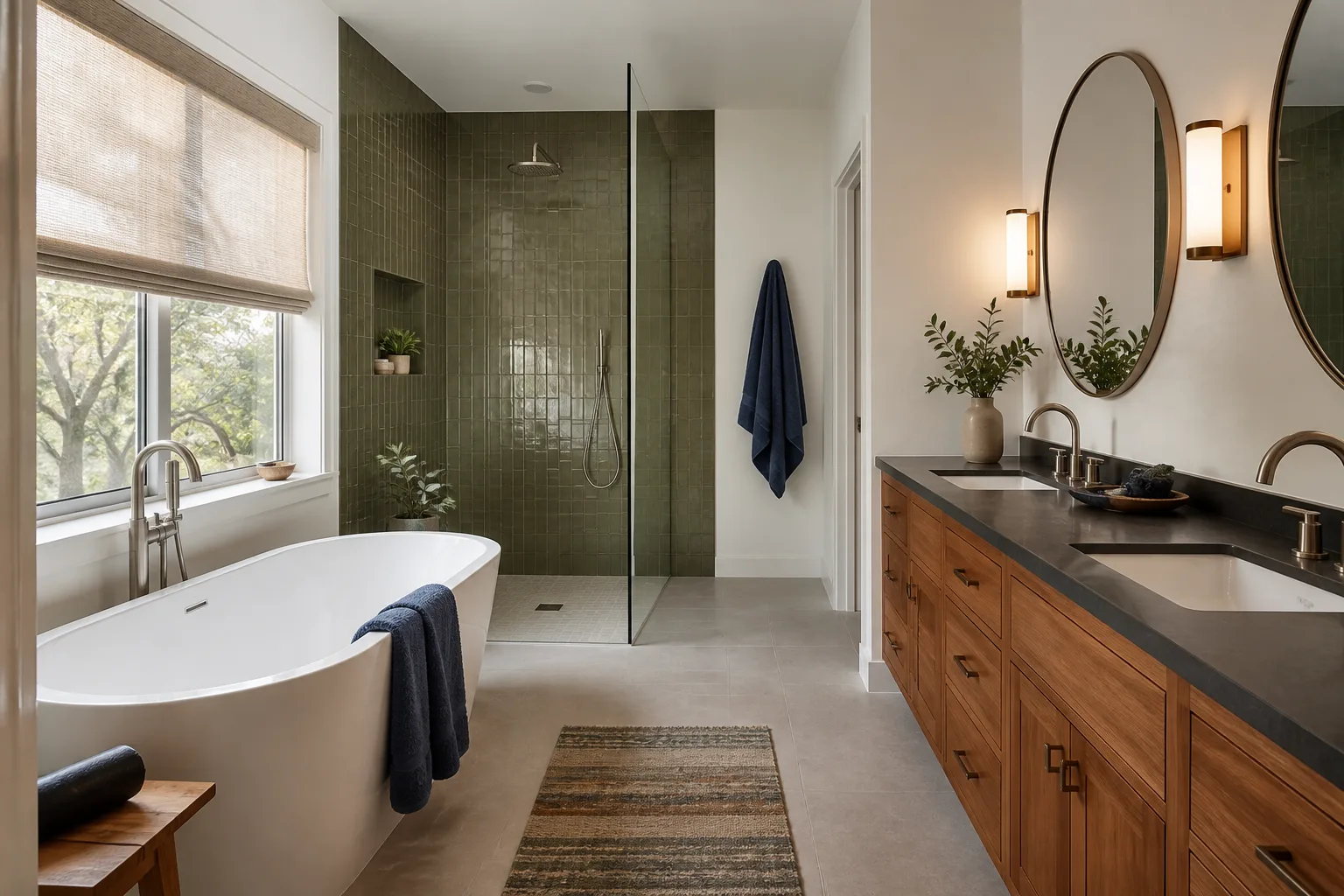
Bathroom remodeling in San Jose for Plant Prefab homes lands between $10,620 and $33,040. On the low end, you’re looking at a surface-level job: a shower replacement with new waterproofing in the wet zone only, a new vanity, new fixtures, maybe tile in the shower. On the high end, we’re gutting the full bath, replacing the subfloor, moving plumbing in a panelized wall, and re-doing everything down to the studs. The range is wide because the existing condition drives the number. A shower pan that’s been flexing for two years does different damage than one that failed six months ago.
Every quote we write for San Jose Plant Prefab owners is a written line-item price before any work starts. Parts and labor are separate lines. You’ll see the waterproofing system by name, the fixture brands and model numbers, and the labor for demolition, rough-in, finish, and site cleanup. No numbers move at the door. The Garrison Standard is our operating framework, and one of its non-negotiables is this: the price we hand you in writing is the price you pay. On top of that, every completed project carries our 365-Day Done Right Promise. If the work fails inside a year, we return and correct it at no charge. You get the full explanation of what that covers, in writing, with your contract.
DIY or Call Us?
You can safely check a few things yourself: whether the caulk is pulling away at a seam, whether a drain cover is loose, whether the toilet rocks slightly, whether a shutoff valve drips. Those are observations, not repairs. What we don’t recommend is opening a wall or pulling tile in a Plant Prefab bath without understanding how the panel system is assembled. The panels are structural in places, and cutting into one without knowing what’s load-bearing behind it is a real risk. Same goes for any electrical work near a tub or shower and any plumbing rough-in work inside a wall cavity. Those are licensed-trade jobs, and in San Jose, the permit and inspection requirements exist for good reason.
If you’re seeing water where water shouldn’t be, don’t wait to see if it dries out. It won’t. Every week of moisture in a wall cavity is another week of rot and mold growth. Call (669) 272-2637 and we’ll schedule an assessment. Written price before work starts, no charge for the estimate.
FAQs
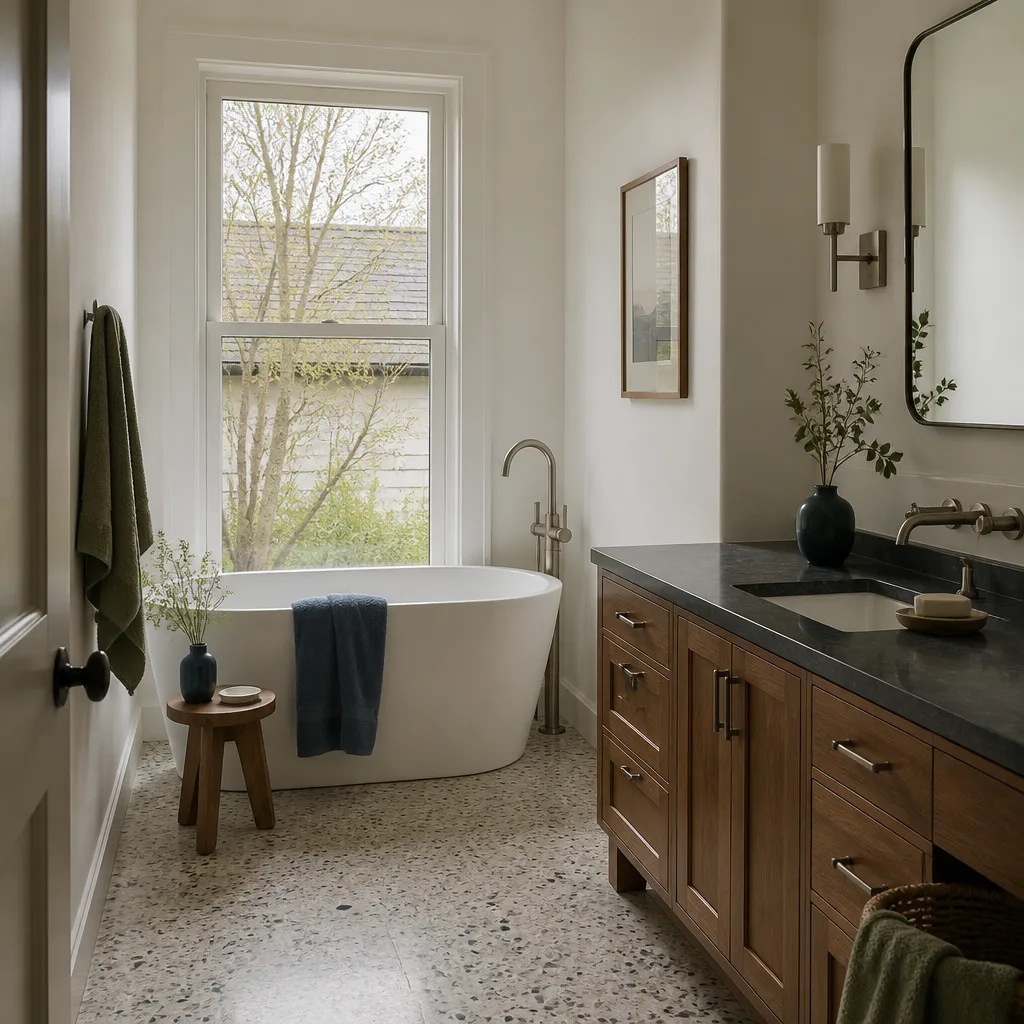
A properly executed remodel with correct waterproofing at the panel seams lasts 15 to 25 years in San Jose’s climate, which is on par with a quality site-built bath. The failure we see most often in prefab homes is at the seam between the factory panel and site framing, and when that seam is detailed correctly, the bath ages like any other well-built space. Call (669) 272-2637 for an assessment of your specific bath.
Sometimes, yes. If the waterproofing failure is isolated to one corner or the pan and the surrounding substrate is sound, we may be able to replace the shower assembly and regrout the adjacent tile without gutting the entire bath. If water has traveled or the subfloor is compromised, a patch job just moves the problem further down the wall. The only honest answer comes from opening it up and looking. Estimates are free.
A shower replacement typically runs five to seven working days, including demo, waterproofing cure time, and finish plumbing. A full gut-out bathroom runs two to three weeks. Cure times on waterproofing membranes and thin-set are code-driven and weather-dependent, and we don’t rush them. Your written scope includes a schedule with the completion date before demo starts.
We stock the common materials on our trucks: standard shower valve assemblies, PEX and copper fittings, backer board, membrane material, and the usual finish hardware. What we don’t stock are fixtures specific to your individual bath. Those get ordered by model number from our approved vendor list, which includes Kohler, Moen, KraftMaid, Cambria, and Silestone. Every material in your quote carries a manufacturer spec and warranty, so there’s no guesswork about what went in.
Written by Curtis Lane, Owner, Bradford Remodeling Co at Bradford Remodeling Co San Jose, serving San Jose and nearby areas.


