
Free written scope consultation - allowances, timeline, and change-order rules on paper before a single trade is scheduled
Sakrete Kitchen Remodeling: The San Jose Owner’s Guide
Most Sakrete products that go into a kitchen remodel fall into two buckets: concrete backer board for tile substrates and floor-leveling compounds for subfloor prep. If your Sakrete-backed tile install is failing, you’re usually looking at cracked grout, loose tile, or a floor that has started to move underfoot. We stock Sakrete-compatible materials on our San Jose trucks and install them as part of a full kitchen remodel priced between $16,520 and $53,100, depending on scope.
The failure you’re seeing usually traces back to one of three things: the wrong product was used for the substrate condition, the subfloor wasn’t prepped to spec, or moisture got where it shouldn’t have. San Jose’s older homes, particularly the ranch-style builds from the 1950s and 60s, have subfloor deflection issues that weaker underlayment products simply cannot bridge. We see this most often in Willow Glen and Cambrian, where the original subfloors have decades of settling behind them.
Which Sakrete Models This Applies To
Sakrete doesn’t make “models” in the way a cabinet line does. What matters is the product type and the spec it’s rated for. The two products that matter in kitchen remodeling are Sakrete’s cement backer board (typically 1/4-inch or 1/2-inch sheets) and their self-leveling underlayment, which comes in 50-pound bags and is mixed on site.
The compatibility gotcha most San Jose homeowners run into: 1/4-inch backer board is for floors only, never walls, and 1/2-inch is for wall tile where studs are 16 inches on center. If someone installed 1/4-inch board on a kitchen wall behind a backsplash, that’s a failed install waiting to happen. The second gotcha is cure time. Sakrete self-leveler needs a full 24 hours before tile goes down, and in San Jose’s cooler winter months, that cure window stretches longer when the slab temperature drops below 50 degrees. We have torn out more than one floor where the contractor rushed that step.
On OEM versus aftermarket: for backer board and leveler, the material is the spec. Cheap off-brand board wicks moisture and delaminates. We use Sakrete or an equivalent that meets the same ASTM standard, and we document the product on the written scope so there is no guesswork about what went under your tile.
Styles & brands we work with







Signs Your Sakrete Kitchen Remodeling Is Failing
- Cracked grout lines running in straight rows. This usually means the backer board seams were not taped and mudded before tile went down. The board flexes at the seam, and the grout cracks along that line first. You can’t caulk your way out of this one.
- Hollow-sounding tile when you tap it with a screwdriver handle. That’s a bond failure, typically from thinset that skinned over before the tile was set, or from dust left on the board. Once you hear hollow spots, the tile is releasing, and the repair is a tear-out, not a patch.
- Floor tile that flexes or moves when you step on it. This points to subfloor deflection exceeding the tile assembly’s rating. In older San Jose homes with 2×6 or 2×8 joists on wide spacing, you need a thicker substrate or additional subfloor layers. The Sakrete board is not the problem; the structure under it is.
- Efflorescence, or a white chalky film, bleeding through the grout. That’s moisture migrating up through the slab and carrying minerals with it. It tells you the slab was not tested for moisture before the remodel, and no backer board on earth will fix a wet slab without a vapor barrier.
- Grout crumbling out at the base of the backsplash, right where the counter meets the wall. That joint is a movement joint and should have been caulked, not grouted. It’s a small symptom, but it tells you the installer did not understand movement accommodation, which means you should question what else got skipped.
See the difference
 Before
 After
After Before
 After
After Before
 After
AfterReplacement Cost & What’s Included
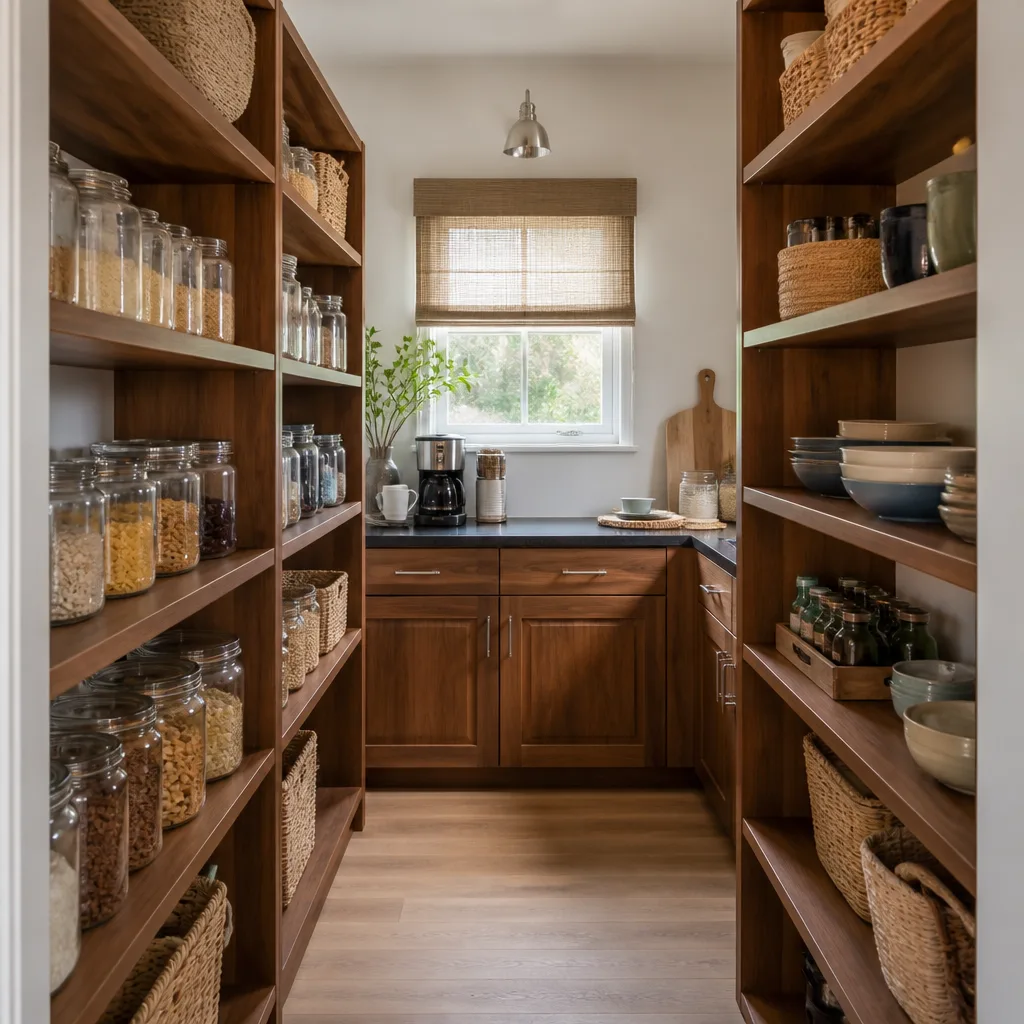
A full kitchen remodel in San Jose runs $16,520 to $53,100 at Bradford Remodeling. That range covers everything from a modest galley kitchen with new base cabinets, laminate counters, and a tile backsplash, up to a full gut-out with custom cabinetry, stone surfaces, and structural subfloor work.
Here’s how the line items break down for the Sakrete-specific work:
- Subfloor prep and leveling: $1,180 to $3,540 depending on square footage and how much self-leveler the slab requires.
- Backer board installation (floors): $590 to $1,770 including tape, mud, and fastener schedule.
- Backsplash tile install with proper substrate: $945 to $2,950 including the board, waterproofing where it meets the counter, and movement-joint caulking.
- Full kitchen remodel (all-in): $16,520 to $53,100 with a written price before we start and no numbers that move at the door.
Every line item is fixed before the first tool comes out, per The Garrison Standard. When we finish, you get the 365-Day Done Right Promise in writing: if any part of the install fails inside a year, we return and correct it at no charge. That includes tile work over the Sakrete substrate.
DIY or Call Us?
There are things you can safely check yourself. Pull a floor vent and look at the subfloor layers. Tap tile with a screwdriver handle and mark the hollow spots with painter’s tape. Take photos of any cracked grout lines. That’s good information for estimating the repair. What you should not do is start prying up tile over a failed substrate without understanding what’s underneath it.
Here’s the honest split: backer board and self-leveler work is not high-danger like garage-door springs, but it is high-consequence. You mix the leveler wrong, you pour it too thick, you skip the primer, and now you have a floor that cracks, delaminates, and has to be torn out again. The material cost is cheap. The mistake is expensive. We have fixed plenty of DIY pours in San Jose, and the fix usually costs more than having us pour it right the first time.
If you want a real number for your specific kitchen, call (669) 272-2637. Curtis Lane, our owner, will walk the job and give you a written price. Straight number, written scope, done when we said done.
FAQs
A properly installed Sakrete substrate with correct subfloor prep lasts 20 to 30 years in San Jose’s climate, provided the slab moisture was handled and movement joints were caulked. Failures we see are almost always install errors, not material failures. Call (669) 272-2637 if you want us to inspect yours.
Hollow tile and cracked grout from substrate failure require a tear-out and reinstall. Patching individual tiles over a failed substrate buys you months, not years. We can assess whether your failure is isolated or systemic with a free estimate.
For a standard San Jose kitchen floor, the tear-out, leveling, board install, and tile work takes 5 to 8 working days including cure time. A full backsplash with substrate repair is typically 2 to 3 days. We give you a written schedule with the scope, and we hold to it.
Yes. Our San Jose crews carry Sakrete self-leveling underlayment and cement backer board in 1/4-inch and 1/2-inch, plus the matching tape, mortar, and fasteners. We also stock materials compatible with KraftMaid cabinetry, Cambria and Silestone surfaces, and the other brands we install, so most jobs move without supply delays.
If your kitchen floor is telling you something’s wrong, call (669) 272-2637 for a free estimate. We’ll give you a written price, explain exactly what failed and why, and leave the site squared away with a signed guarantee in your hand.
Written by Curtis Lane, Owner, Bradford Remodeling Co at Bradford Remodeling Co San Jose, serving San Jose and nearby areas.


